
Wednesday, 9 December 2020

End of Extension
2020 is coming to an end. It was my first time being in Extension Class. I would like to think of it as an opportunity to be thankful for. I give many thanks to Mrs Langitupu for giving me the opportunity. I have a few highlights for this year.

My favourite highlight for this year would be the year 7&8 Extension Trip to KMPG. Some of KPMG's team took us around the KMPG building for a tour. We made christmas cards, decorations and gifts. We ate some nice food, my favourite food would've been the chocolate muffin :))

Friday, 4 December 2020
Pt England's Art Exhibition
Today Pt England School had an art exhibition. All of the classes had to make art and put it up in their classes.
First team we visted was team four. Team 4 drew different types of polyneisan patterns. Each pattern had a little description about what that pattern sumbolises. I saw alot of Niuean, Tongan, Maori, Samoan and Cook Island patterns. My favourite ployneisan pattern's were drew by Ezekiel, I say this because of the detail he put in his drawings.
We then made our way to Team 1. Team one looked at differnt types of art, they looked at Pablo Picasso's shape art and Vincent Van Gogh's Sunflowers. Team 1 mainly looked at art with colour. They recreated different piece of artworks and used different artist's methods.
Team 2 looked at cubism potrait, Pablo Picasso, Indian elephants and rangoli pattern's. They created different pieces of art works by using Pablo Picasso's shape method.
Monday, 30 November 2020
SLJ Week -1, Demo Task

For todays task was I had to color in using Art Coloring Book to recreate google images.
Tuesday, 24 November 2020
Monday, 23 November 2020
Solubility
WALT: make accurate measurements using a variety of measuring equipment.
Task Description: Today we learnt about solubility. I thought this task was mild challenging. I would love to do this task again.
Tuesday, 10 November 2020
Who was Kate Sheppard and what did she do ???
Kate Sheppard was a protester for ‘Women’s rights’. She was born on 10 March 1847 and died on 13 July 1934. She fought for New Zealand women’s rights to vote. Kate Sheppard was born in the UK but later on left to permanently live in New Zealand.
The ‘Women's suffrage’ protest was a famous protest held in New Zealand. It was first held in the 19th century. The protest was held to give New Zealand women the right to vote. It took a few petitions for ‘Women’s Suffrage’ to be successful in 1893.
Kate Sheppard travelled around New Zealand for 6 years. Her first petition failed in 1891 but she tried again. Another petition was held in 1892 but failed yet again. In 1893 she collected more than 32,000 peoples signatures for her petition, it was taken to Parliament House in a wheelbarrow.
In the early 1800s women had restricted roles, that changed in 1893 when New Zealand became the first self-governing country to give women the right to vote on the 19th of september, in 1893.
Kate Sheppard was a really good leader who fought for New Zealand Women’s rights to vote and have a full role in society.
Wednesday, 4 November 2020
Statistics and Probability
WALT: work out the probability something will happen interpret and draw conclusions from the data presented in graphs.
Tuesday, 3 November 2020
Stand Up
WALT: combine and condense ideas and information from a range of texts to form and synthesise a new idea.
Monday, 2 November 2020
Friday, 30 October 2020
How are cows bad for the einvironment?
How are cows bad for the environment?
Introduction:
Have you ever thought about eating less dairy? O0r did you know cows are bad for the environment? Some people don't eat dairy at all because they know cows flatulence, fertilizer and cutting down trees are bad for the environment.
Fertilizer:
In order to grow grass, farmers use fertilizer. Fertilizer is a chemical that helps make grass grow faster. When it rains, the fertilizer flows into streams and rivers, causing algae to overgrow. The algae will then take in all the oxygen and trap in the heat causing everything to die in the river. Using fertilizer is one of the causes of water pollution.
Flatulence:
When cows eat and drink, they are most likely to pee/poo, burp and fart. When cows pee/poo, burp and fart, it releases methane gas into the atmosphere. The methane gas then traps in the heat from the sun causing climate change. Cows flatulence contributes to climate change more than you think.
Cutting Down Trees:
Dairy farmers have to cut down trees in order to produce milk from the cows. When dairy farmers have forested land, they cut down the trees to have more space for cows and grow more grass. Growing grass faster needs fertilizer, and more grass leads to more flatulence. 3.5 to 7 billion trees are cut down every year for cattle.
Conclusion:
In conclusion, cows are bad for the environment due to using fertilizer, their flatulence and cutting down trees. Cows contribute to climate change more than you think, so next time you go to the shop to buy milk, consider buying less than you would normally buy.
~Pauline :))
Georges Seurat
Today we learnt about Georges Seurat and here is a poster with some facts.
WALT: make a poster with some facts about Georges Seurat.
Friday, 16 October 2020
Welcome back to term 4!
This was the first time Pt England School had immersion assembly during covid-19. The theme for this term is 'Art Alive'. This term Team 1 is going to create famous art pieces. Team 5 is going to be learning about different art creators.

Thursday, 15 October 2020
Wednesday, 14 October 2020
Monday, 12 October 2020
Friday, 25 September 2020
The Red Thread
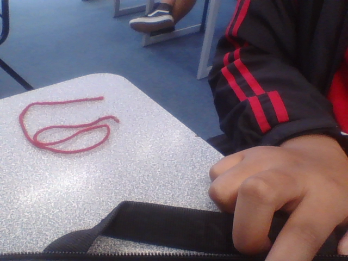
John Gore's object is a Red thread which he traded with a lady named Kaiwhatu. She used it to weave.
I am in the John Gore on the endeavor and then I got traded to a lady named Kaihatu she used me to weave.
I am a beautiful red thread inside the pocket of John Gore. I hear people talking and I hear explosions. I was traded to the Maori people. A lady named Kaiwhatu unravelled me into a thread. I was weaved into kakahu.

Subscribe to:
Posts (Atom)